Roof rack and snorkel designed and built by Germán Piñeres
Desert Raid crosses Morocco along the Dakar routes in cars more than 15 years old, navigating with a road book and no GPS. I prepared a 205 GR for it: roof rack, snorkel, skid plate, lifted rear, six off-road wheels, lights and wiring, storage and a full engine service. And I built the social media and found the sponsors that pay for it.
Desert Raid is a training and solidarity adventure, not a race. Teams cross Morocco in 8 days and 6 stages, about 2,500 km, sleeping in camps in the middle of the desert. Stages are scored on navigation, strategy and regularity, not speed, and the biggest prize is simply reaching the finish.
The rules keep it a real adventure: the car must be more than 15 years old and not a 4x4, navigation is by road book only, as in the Dakar, and there is a night stage and a marathon stage. Each team has to write a business plan, find sponsors and deliver at least 40 kg of school material to schools in the desert. The organisers have more than 30 years of experience and run the mechanics, safety, logistics and camps.
Why a 205? Old, simple cars are the right tool: they're cheap, tough, light enough to pull out of the sand, and have no electronics that can't be fixed in the desert. "What doesn't exist can't break."
8days
6stages
2,500km, mostly off-road
40 kgof school material, minimum
15+years old, no 4x4
The modifications
A short video for most of them, the rest in words: what was done and how.
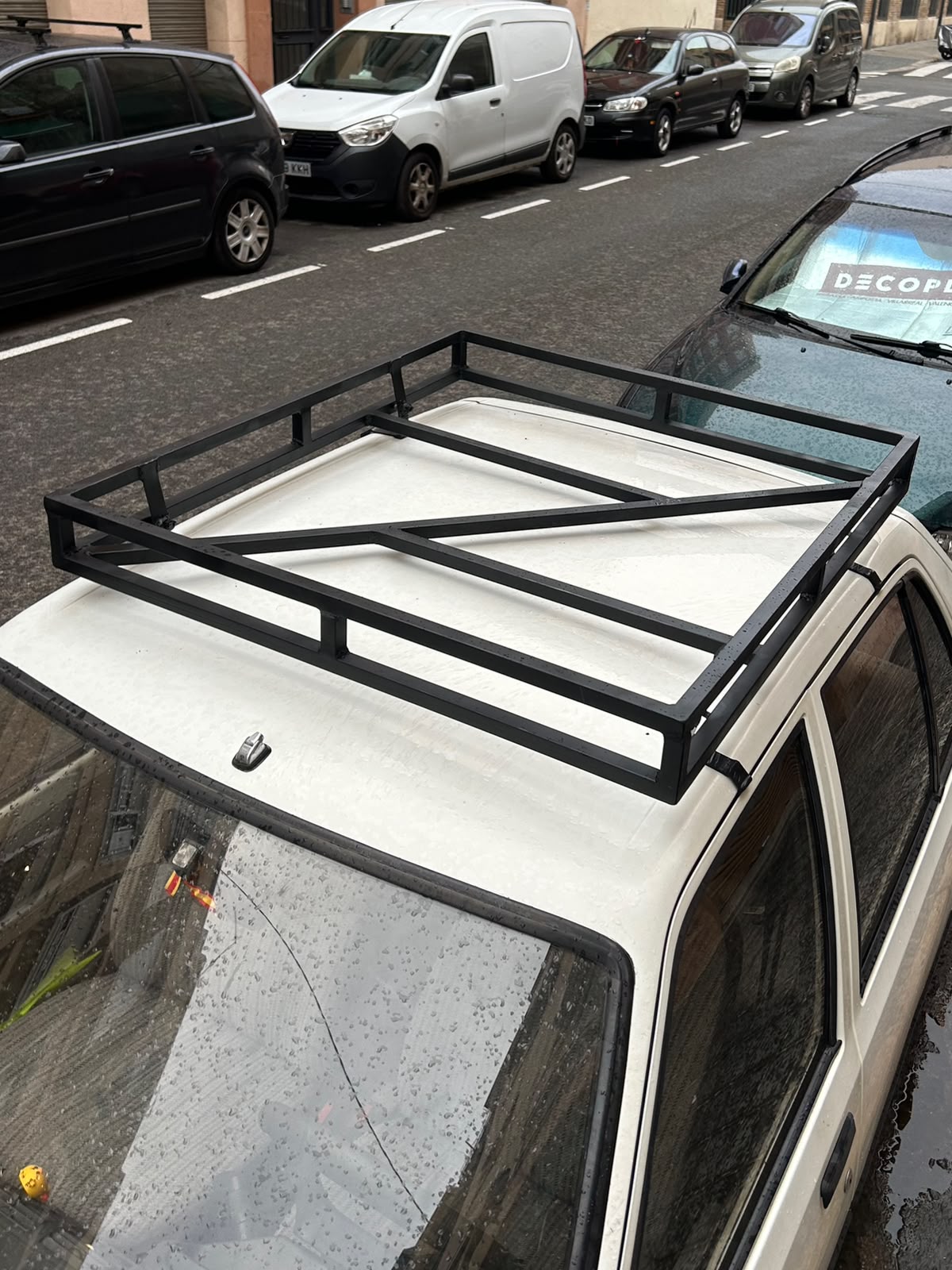
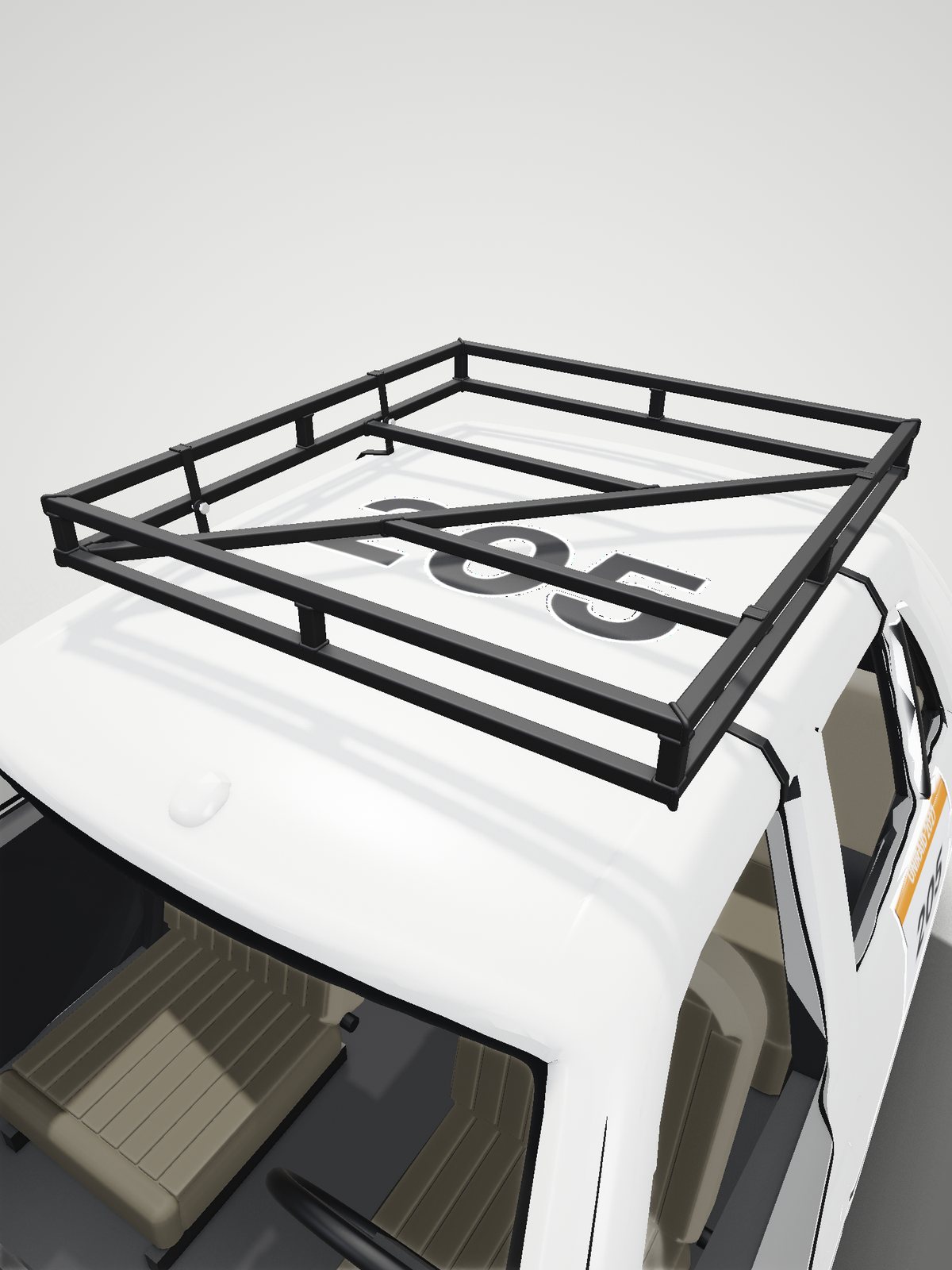
A basket made of 25 × 25 × 2 mm square tube, 110 cm long and 100 cm wide. It is two welded rectangles. The lower one carries a diagonal brace and two cross tubes running parallel to the 100 cm side, so the load has a floor. Eight 6 cm posts (four corners and the middle of each side) join it to the upper rectangle, which makes an 11 cm deep basket. Every joint is welded all the way round.
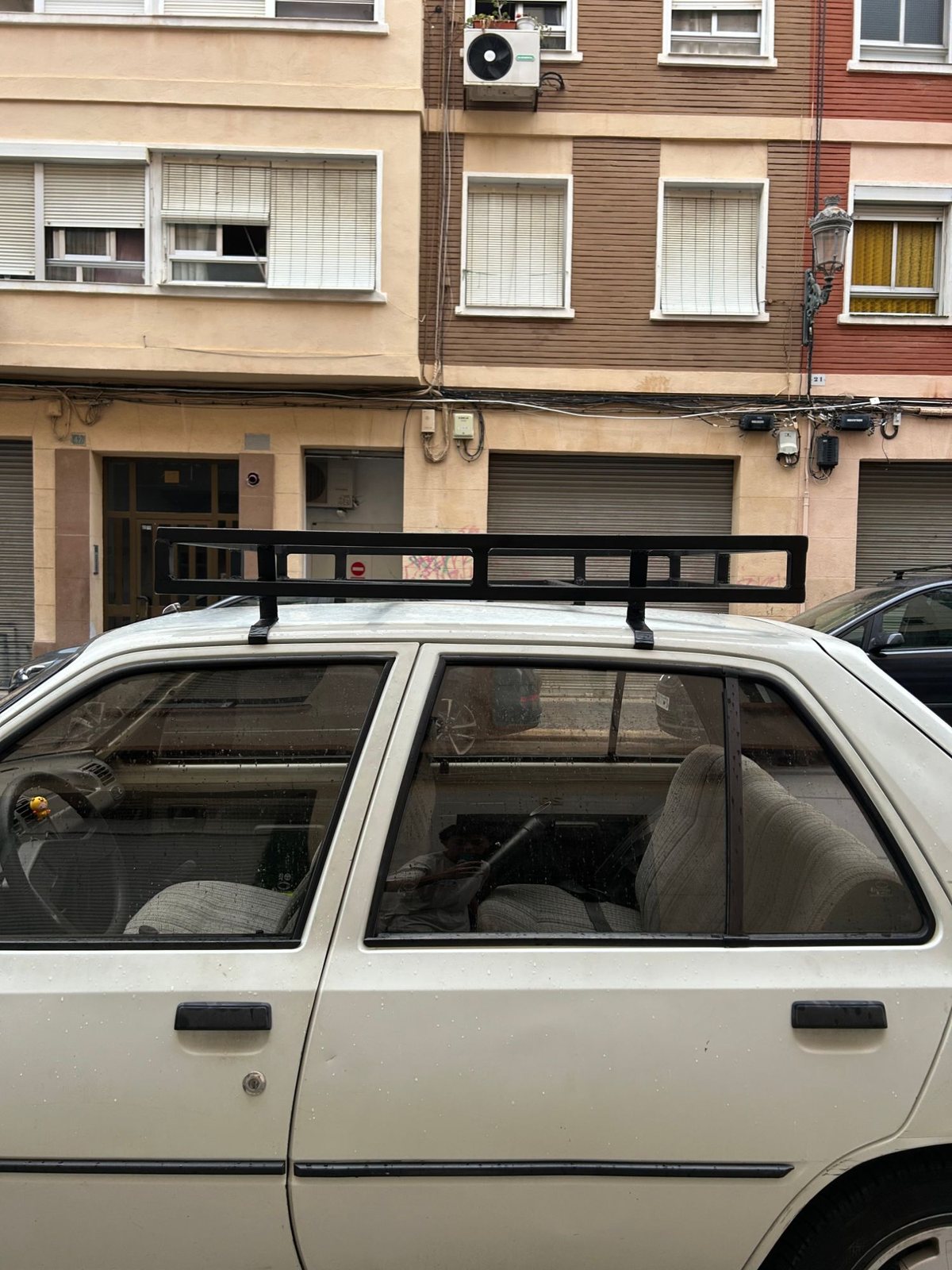
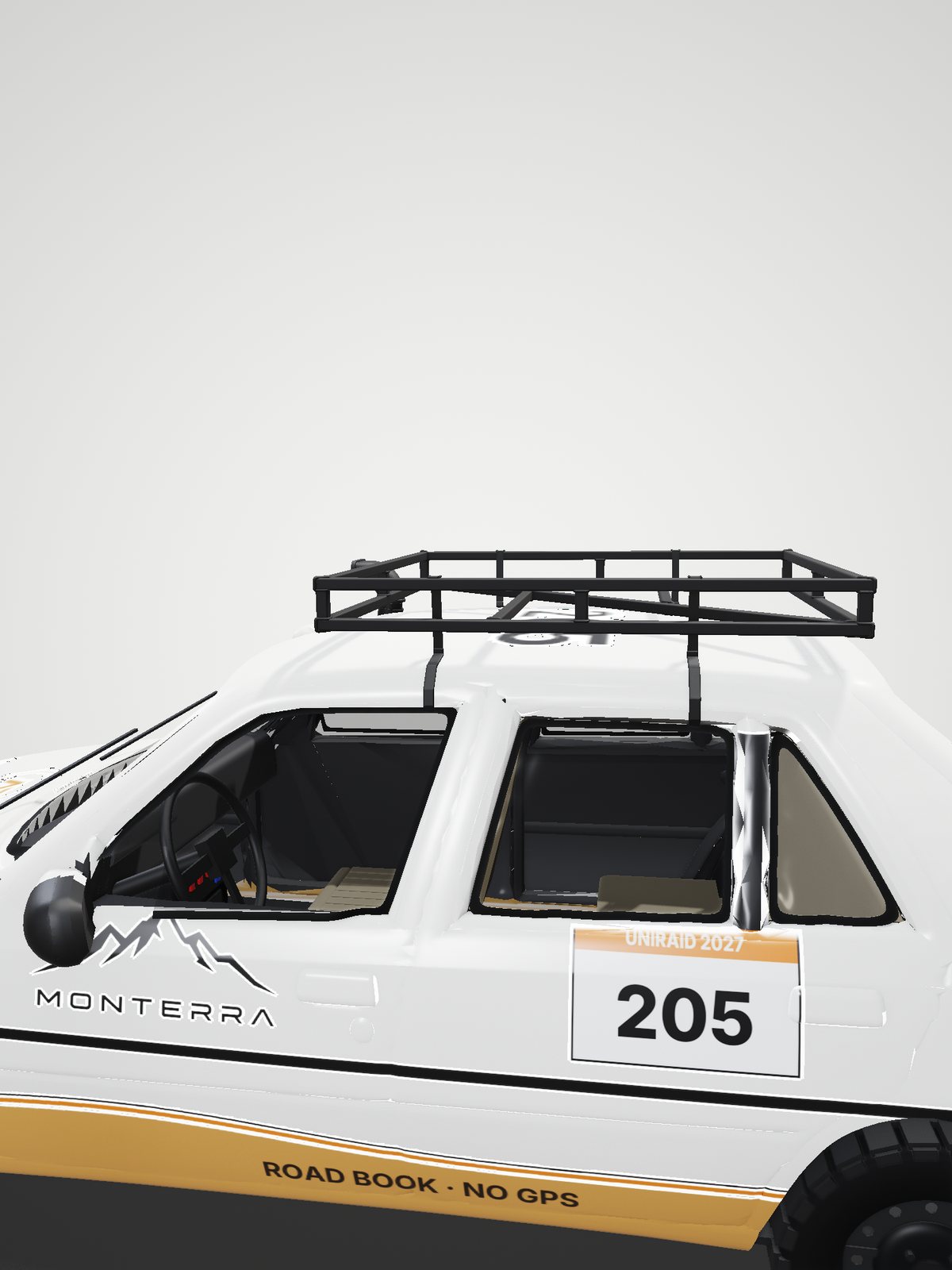
It clamps on the door frames, no drilling. Each of the four legs is a 20 × 3 mm flat bar welded under the frame and bent to the angle of the door frame. A second plate runs parallel to the frame with a nut welded to it; tightening the bolt pushes against the lower frame tube and closes the legs onto the door frames. The feet are wrapped in three layers of black electrical tape to protect the paint.
Polished, primed and sprayed black. On top: the spare wheel, a 10 L fuel jerrycan, sand ladders, a sand shovel, ratchet straps and the LED bar at the front.
Air intake at roof height
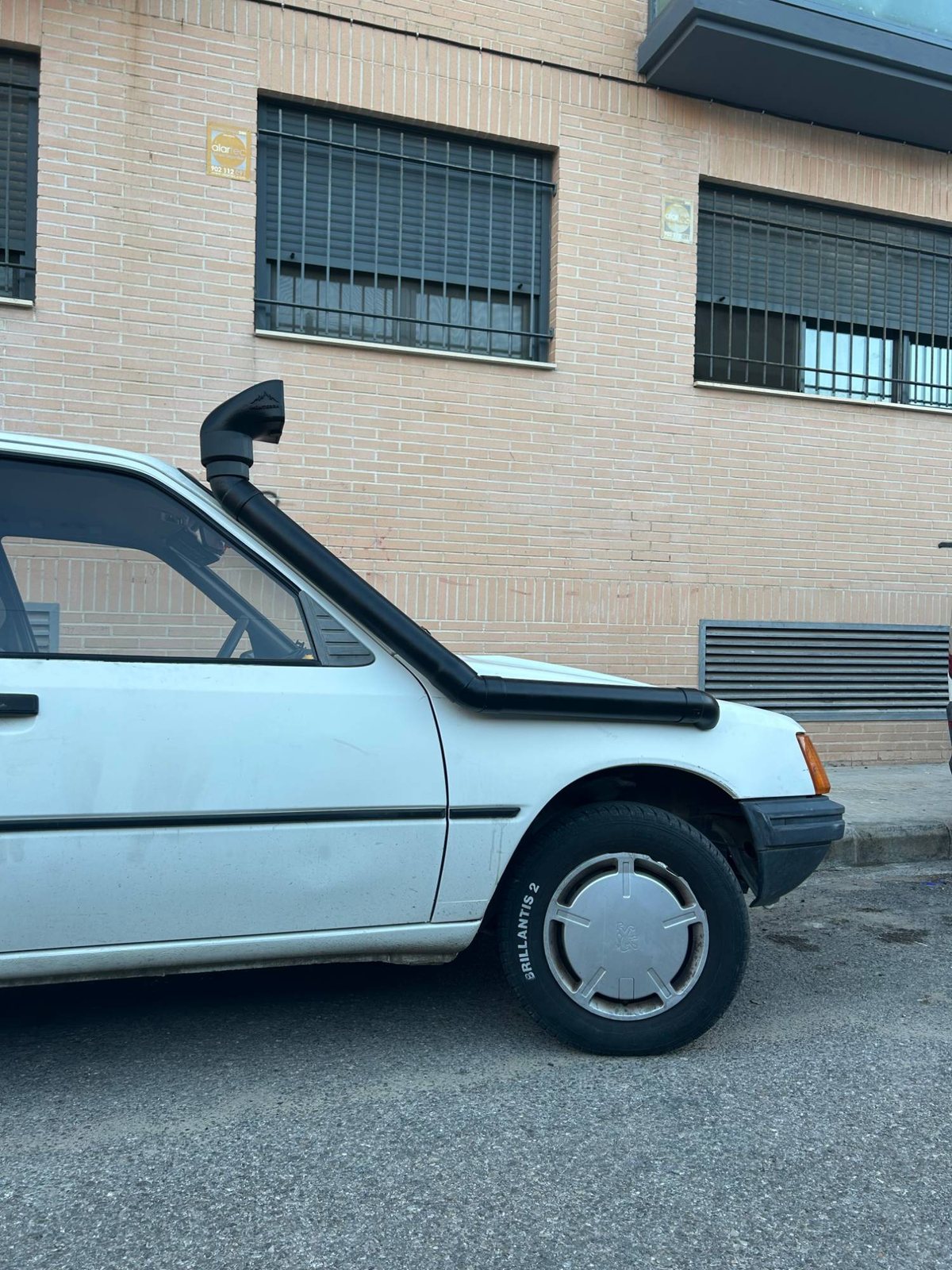
Home-made snorkel
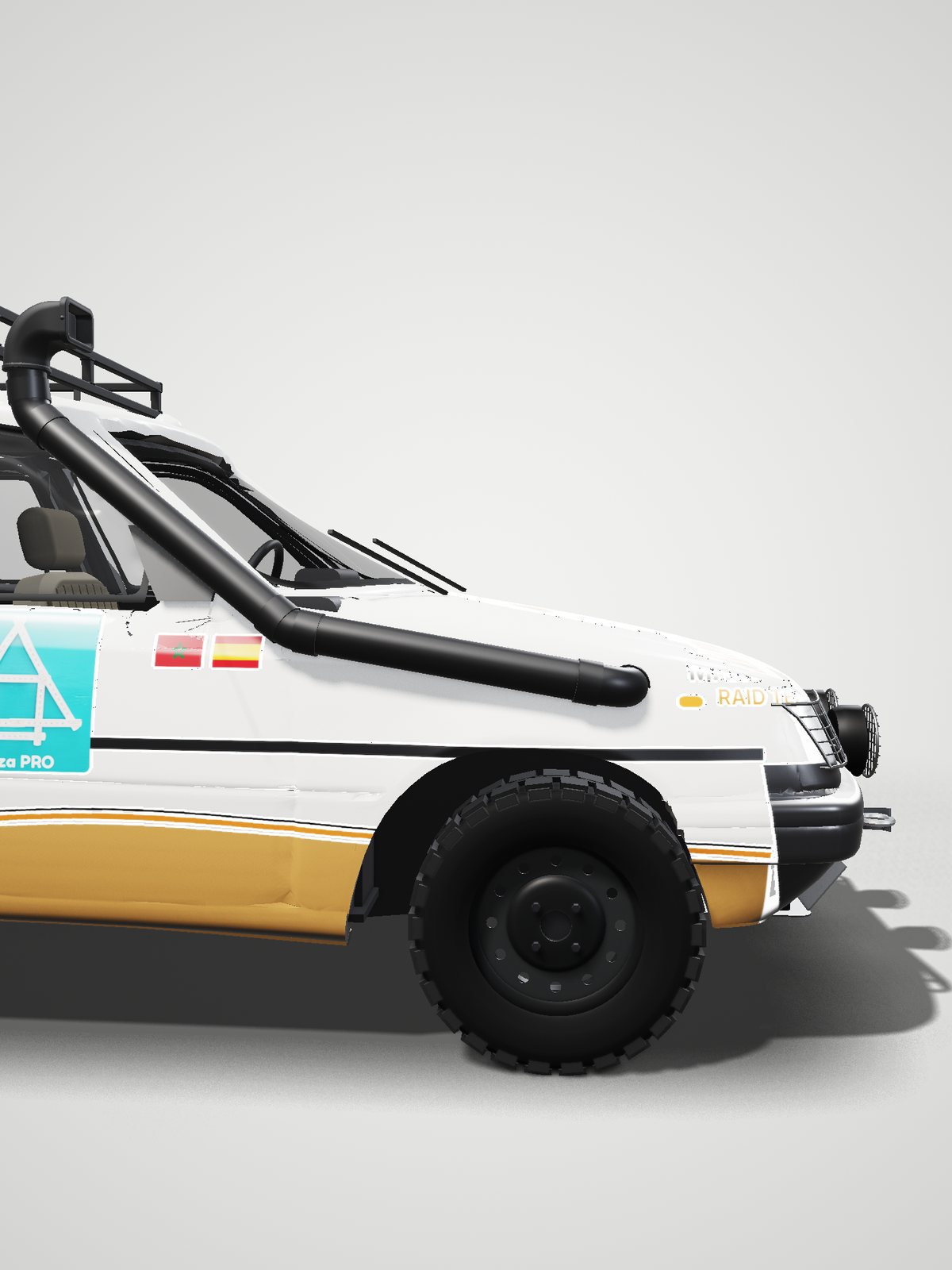
In the desert the air at bumper height is full of sand. The snorkel takes the engine's air from the roof line instead. It is built from 75 mm grey PVC: one 90° elbow at the bottom, a 45° elbow in the middle and another 45° elbow up to the head, glued with PVC adhesive and painted with two spray cans. The head is 3D-printed, scaled down to suit the size of the 205.
Mounting: two 10 mm holes in the car. One in the A-pillar, where the bolt goes in from the inside after taking the pillar trim off, and one in the wing above the front wheel, where the bolt goes in from the mudguard side. Inside the tube there is an 8 cm long piece of 30 × 3 mm plate with three 8 mm holes 2 cm apart: M8 nuts welded on the left and right holes and an M10 nut in the middle. Two M8 flat-head screws go through the PVC into the side nuts, and the M10 bolt comes from inside the body into the centre one.
A 75 mm hole in the body at the 90° elbow lets the air in, and a flexible hose with a clamp takes it to the air intake.
Mandatory
Skid plate
A rock under the sump can end the raid, so a skid plate is compulsory: at least 4 mm of steel (or 6 mm of aluminium), solidly fixed to the chassis. This one is 4 mm steel, cut to cover the sump and gearbox, with a ramped front lip so it slides over obstacles instead of catching them.
It is bolted on silent blocks: the rubber mounts take the shocks so the brackets don't crack after a few days of washboard tracks.
More ground clearance
Rear lifted on the torsion bars
What was done. The 205's rear suspension uses torsion bars instead of springs, and each trailing arm sits on the splined end of its bar. With the rear wheels off, each arm was taken off and put back one spline further round. That changes the angle it rests at, so the rear of the car sits higher with no new parts. The front stays at its standard height.
Why. More clearance under the car means less chance of getting stuck in soft sand and fewer hits on the underside from rocks, ridges and ruts. It also makes room for the spare wheel under the boot.
Why not more. A higher car is less stable. The rear is already lifted, and lifting it further puts extra stress on the rear axle bearings. With a good skid plate underneath, more lift isn't needed.
165/70 R13
Six off-road wheels
All-terrain tyres in 165/70 R13, the same size as stock, with a tread that bites in sand and gravel. Five tyres were bought and one more rim, so the car carries six wheels: four on the car, one on the roof rack and one under the boot.
Two spares are on the raid's recommended list: most of the route is off-road and far from towns, so punctures are part of the game.
LED bar · rally lamps · H4 LED
Lights for the night stage
Desert Raid includes a night stage, so the lighting was upgraded:
LED bar on the front of the roof rack, for a wide beam.
Two rally lamps on the grille, like a classic rally car.
H4 LED bulbs in place of the original halogen ones in the headlights.
Metal mesh guards over the front lights, like on police cars, so stones don't break the glass.
Fused, switched, labelled
Electrical install
Every new circuit runs from the battery with its own fuse, and the lights go through a relay. The wiring ends at a switch panel above the radio, within the driver's reach.
Switches for the rally lamps and the LED bar.
A manual switch for the electric radiator fan, so it can be forced on in slow, hot sections without trusting the old thermostat switch.
USB ports on an independent line with its own in-line fuse, for the phone (road book trip meter app) and the rest of the electronics.
Space and weight
Rear seats out, storage in
The rear bench came out (the raid recommends it): it saves weight and leaves a flat load floor. In its place, a board and a place for each thing the raid needs, all strapped down because the car will jump:
Tool box, fire extinguisher (mandatory) and first-aid kit (mandatory).
Water (10 litres minimum) and food.
Spares and the 40 kg of solidarity material for the desert schools.
Mandatory hooks
Rescue hooks and cut bumper
Getting stuck in the sand happens to everyone, and the rules ask for rescue hooks welded directly to the chassis, because they take very strong pulls. The ends of the front chassis rails, near each headlight and above the number plate, were drilled; a ring goes through with a washer and nut, and everything is welded.
The sling is made of flat scrapyard seatbelts knotted together. The lower lip of the front bumper was cut away for a better approach angle in the dunes.
Before leaving
Engine care
An old engine is simple, but it has to arrive. Before the raid:
New rocker cover gasket and head gasket.
Timing belt.
A fuel filter before the carburettor: the dirt sitting in an old tank comes loose on the bumps and can block it.
New coolant hoses.
The air filter box sealed to the carburettor, so dust can't get round the filter.
Technical checks
Everything on the organisers' mandatory list is checked before the start.
Mandatory
✓Rescue hooks · front, welded to the chassis
✓Skid plate · 4 mm steel
✓Tow sling + 2 shackles · textile, 6 m or more
✓Sand ladders · on the rack
✓Compass · navigation is road book only
✓10 L of water
✓10 L fuel jerrycan · carried empty until the organisers say
✓Fire extinguisher · in the back
✓First-aid kit
✓Tyre pump · a manual one never fails
✓12 V socket + phone · trip meter app for the road book
✓Tent, sleeping bag, mat · desert nights are cold
✓40 kg of solidarity material · for the schools
Recommended
✓Second spare wheel · six wheels in total
✓Fuel filter + spare · fitted
✓Spare air filter
✓Rear seats removed · more space, less weight
✓Ratchet straps · everything tied down
✓Shovel · on the rack
✓Head torch, sand goggles, duct tape
Sponsors and social media
The other half of the project.
Desert Raid asks every team to run itself like a small company: a plan, a budget and sponsors. I created the team's social media (@monterrabros) to tell the story of the preparation and give the sponsors visibility, and I handled everything with them, from the first contact to their logos on the car.
Offers in stages
Sponsorship split into levels, so a small business can join with a small amount and bigger partners get more space.
Visibility
Logos on the car and the team T-shirt, posts during the preparation and from Morocco, plus a magazine and a podcast.
Simple paperwork
The organisers invoice the sponsors directly, so for them it is an ordinary advertising expense.
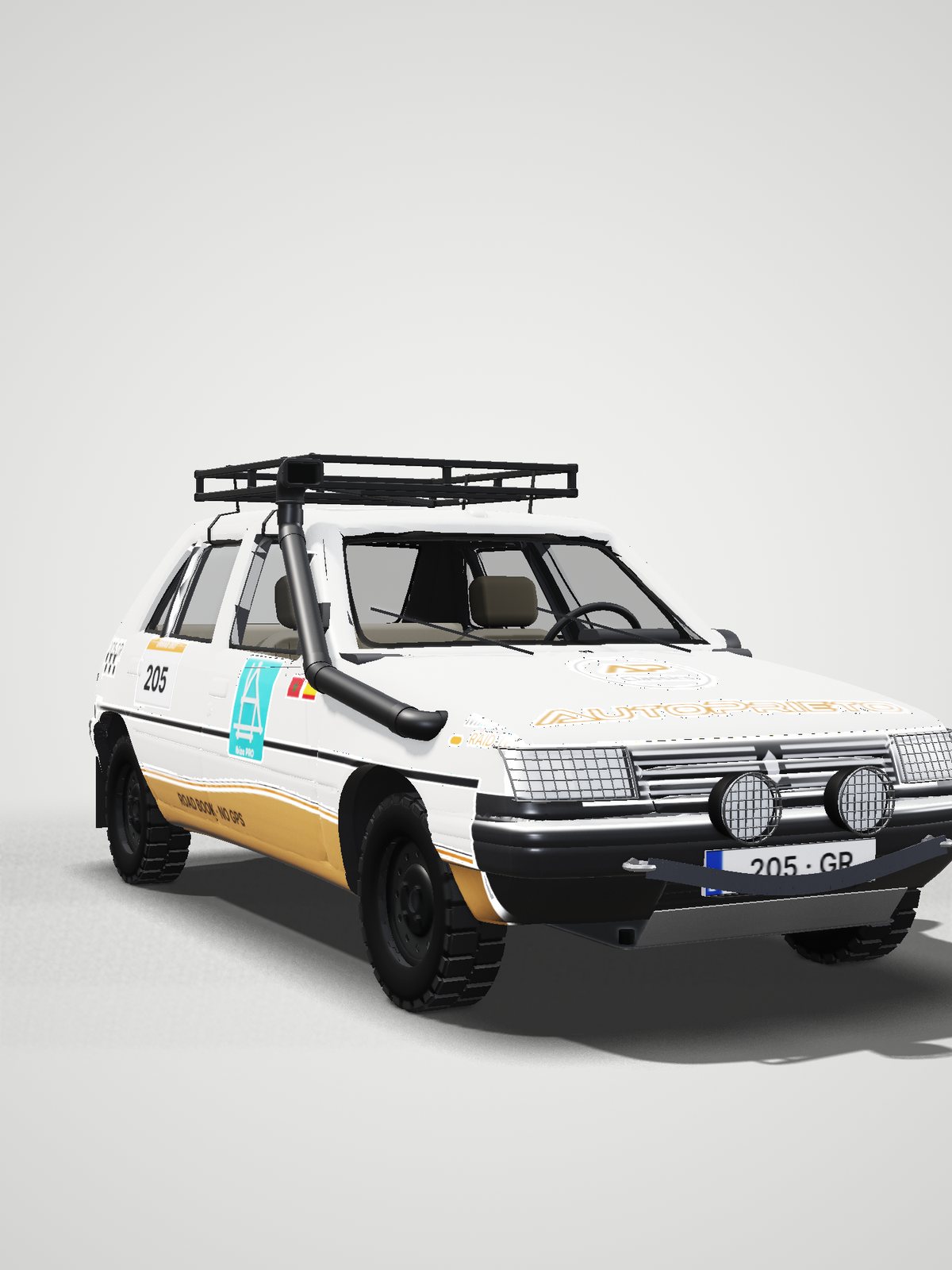
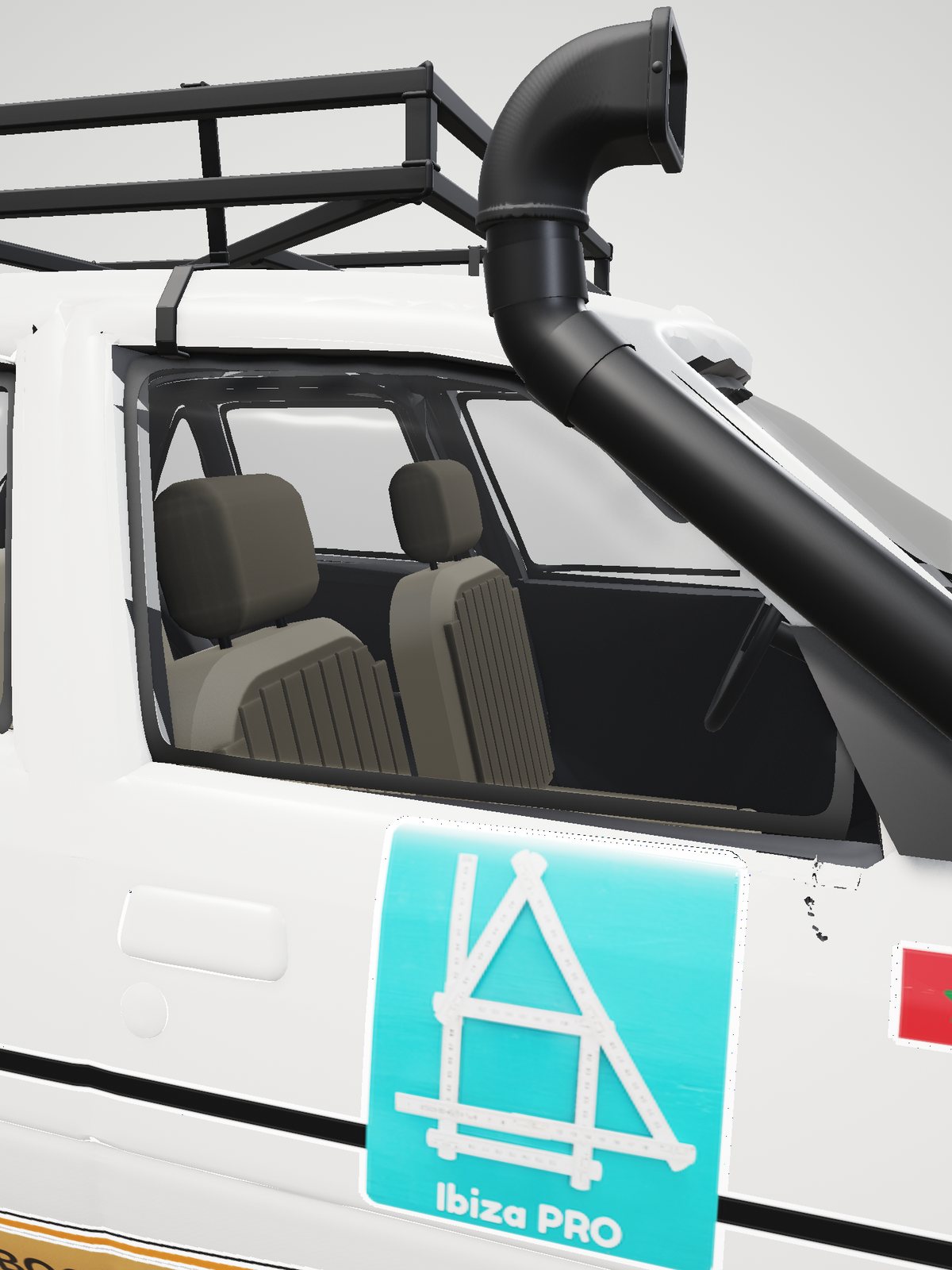
On the car: Monterra on the left side, AutoPrieto and AP Classics on the bonnet, Ibiza PRO on the right door, with the raid's own sun strips and door numbers.
Team T-shirt
Sand-coloured, with the sponsors on the chest: AP Classics, Monterra and AutoPrieto. On the back, the 205 sliding through the dust under a big 1987, with PEUGEOT 205 GR and @monterrabros.
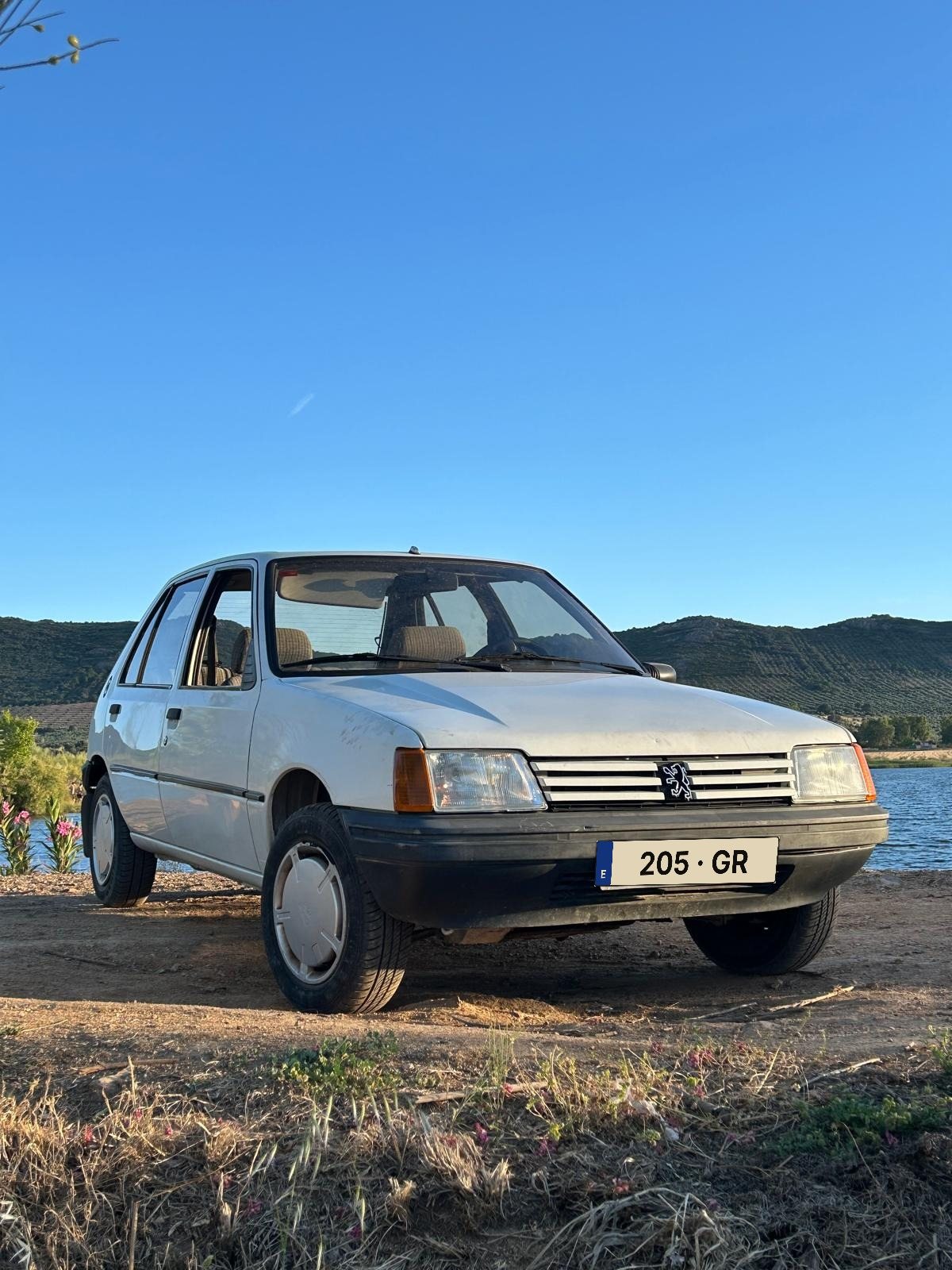
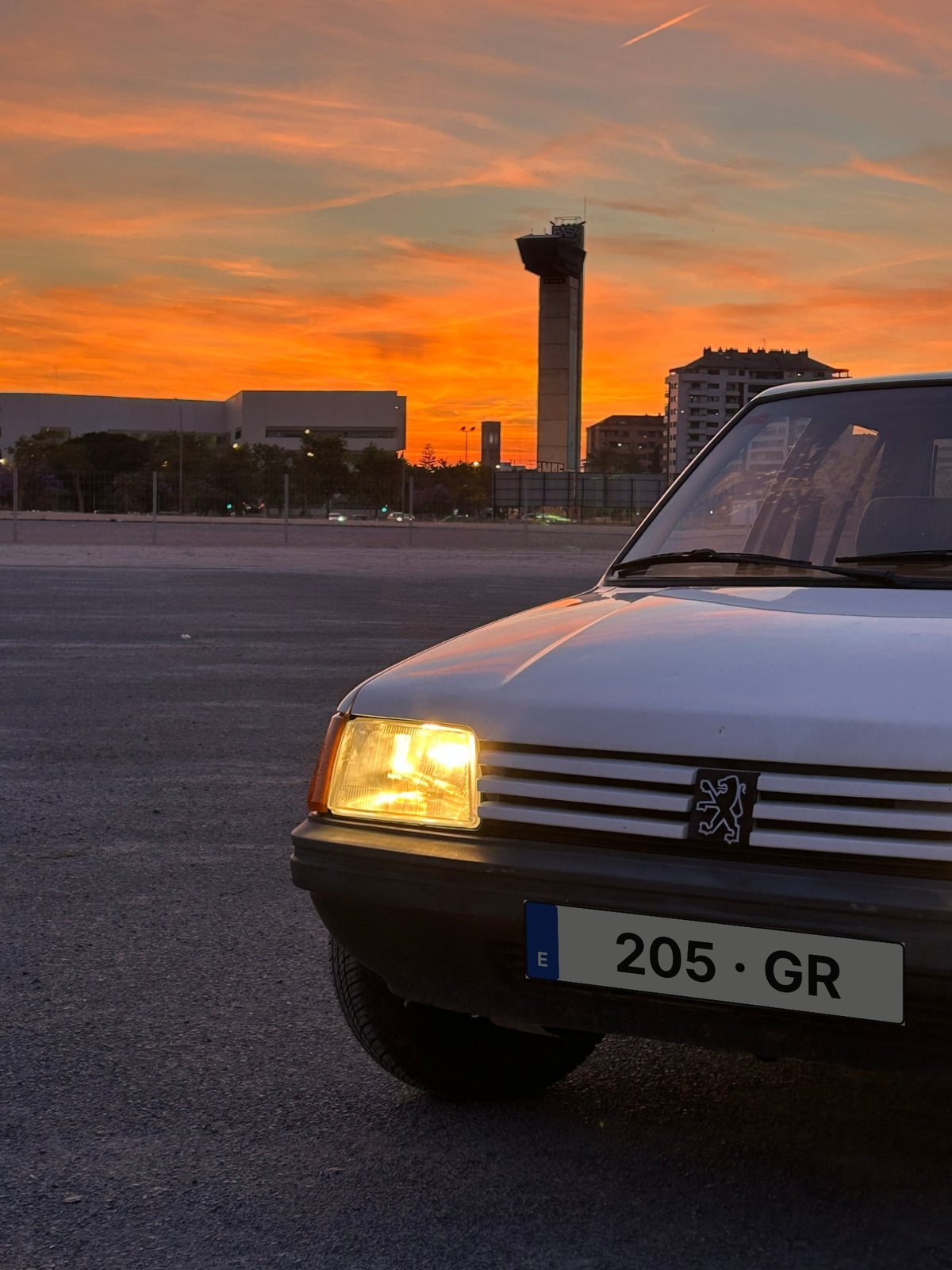
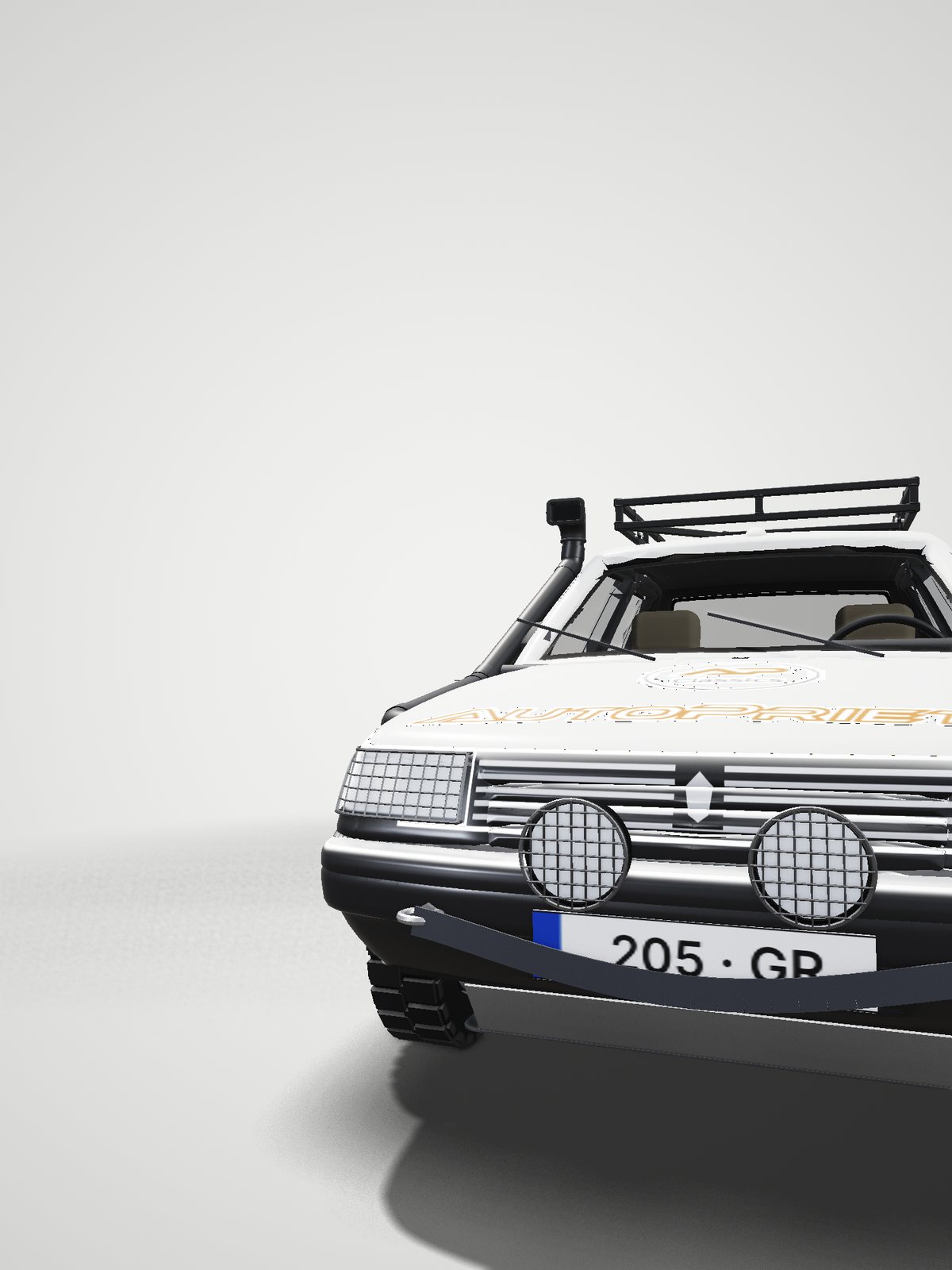
The real life one vs 3D model
Real3D model
From the front right. The 3D model carries the raid kit: roof rack, snorkel, lamps and skid plate.
Real3D model
Low at the nose: headlight, grille and the plate.
Real3D model
From above: the welded rack clamped on the door frames.
Real3D model
Left side: the black welded rack on the roof.
Real3D model
Right side: the snorkel runs from the wing up the windscreen pillar.
Real3D model
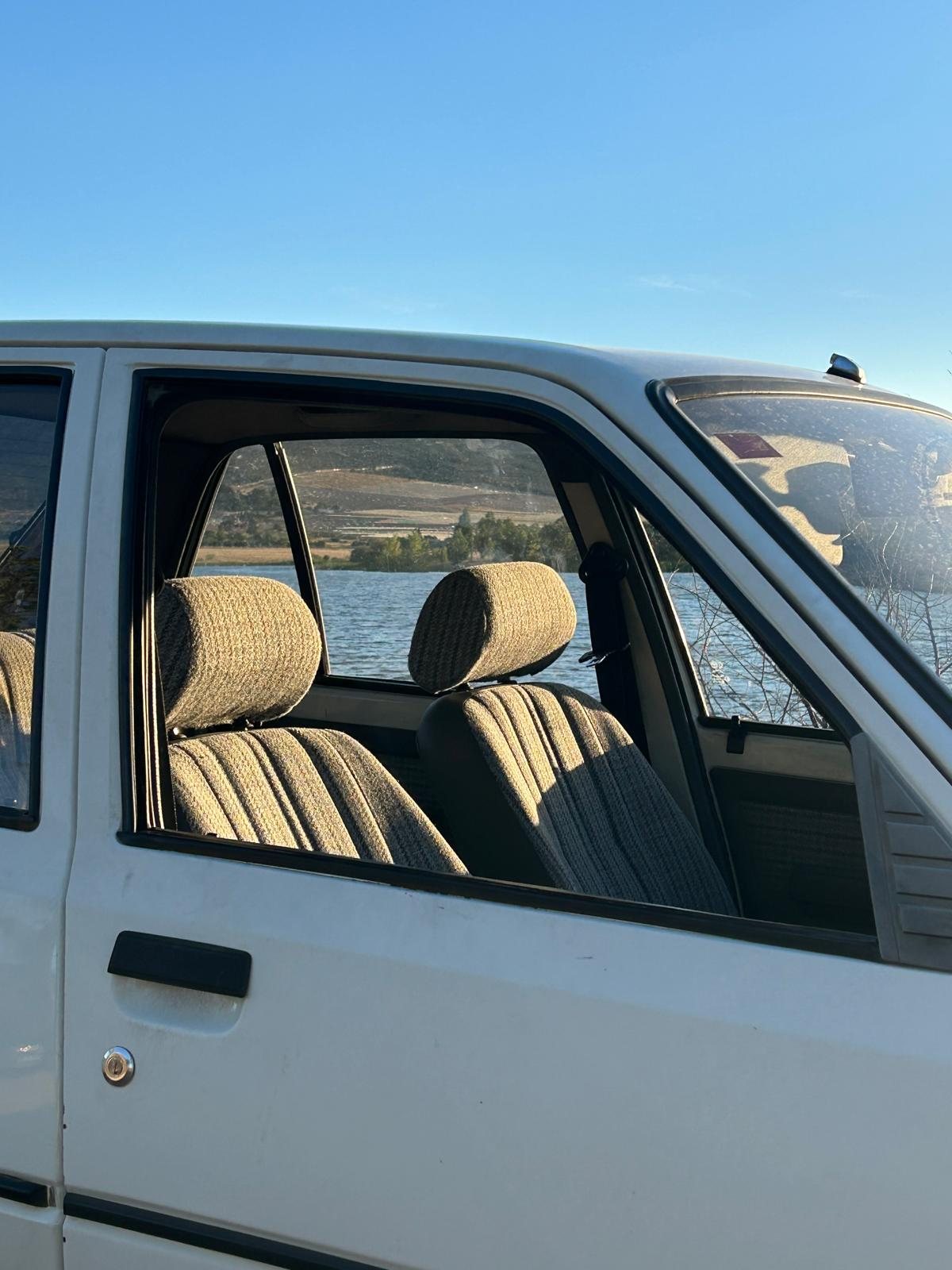
Through the front window: the two front seats with headrests.
Real3D model
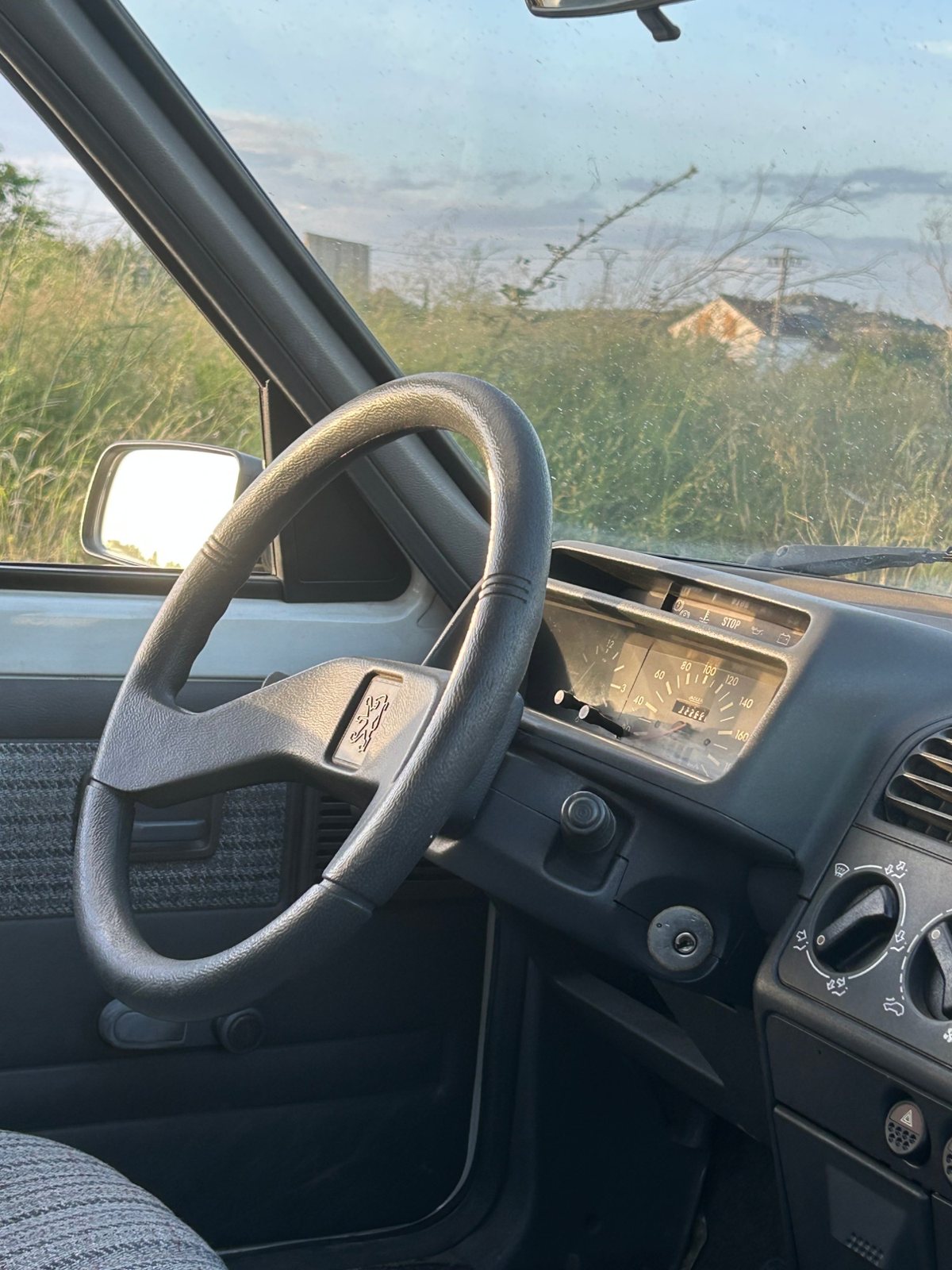
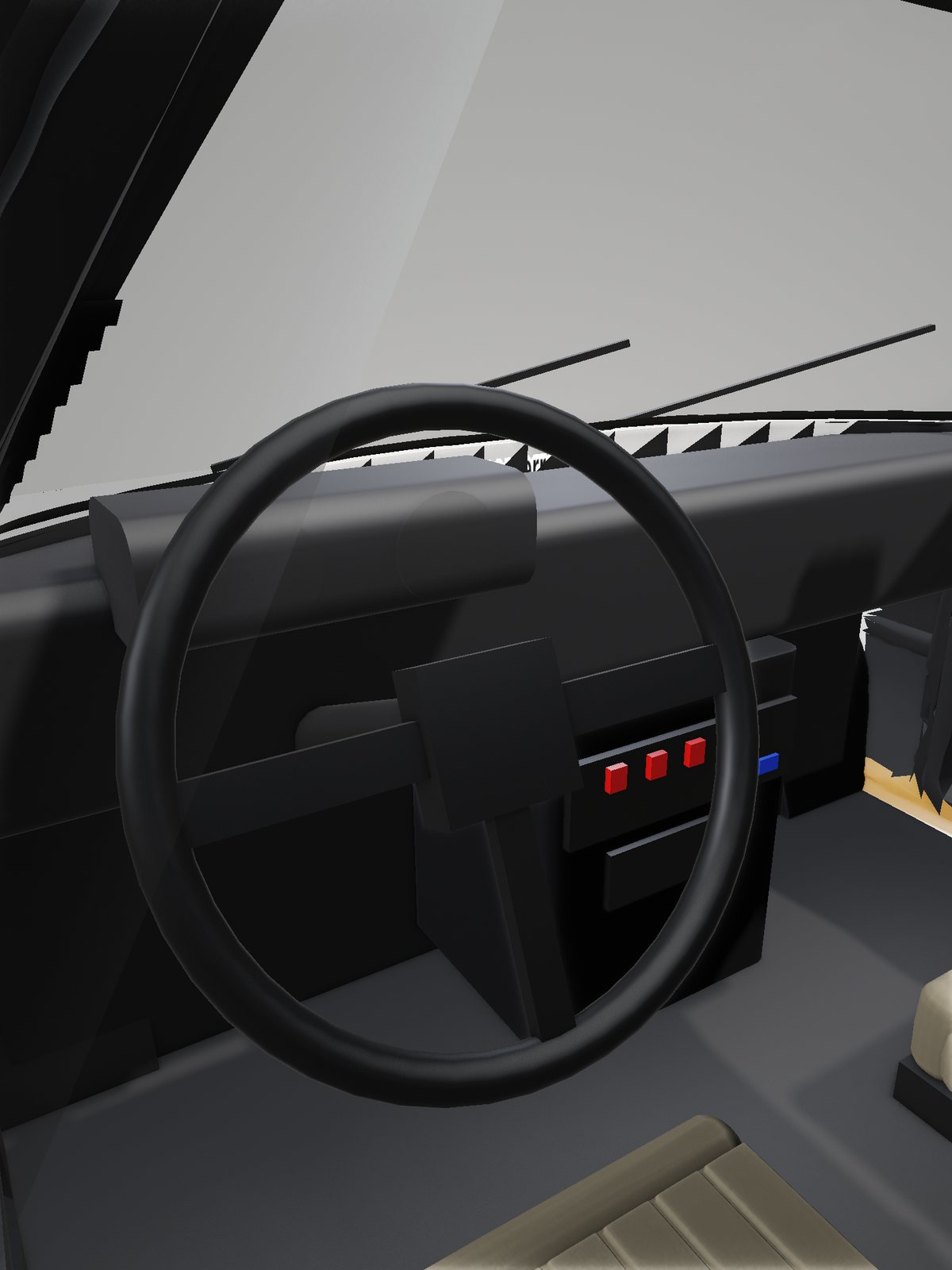
The driver's place: wheel and dashboard. The 3D model adds the switch panel.
Next stop: Morocco
Follow the preparation and the raid on @monterrabros.